Overview
momowoo is a story-driven pottery e-commerce platform that transforms traditional online shopping into an emotional adoption experience. It allows users to follow each handmade piece from wheel to fire, building empathy and connection through storytelling and design.
My Role
UI/UX Designer & Researcher
Time
12 Days
Tools
Figma/Figma Jam/Zoom
Problem
Most e-commerce platforms for handmade goods focus on transactions rather than connection. Users who value craft and story struggle to feel emotionally engaged because the making process and human touch behind each piece are missing from the online experience.
SOLUTIONS
Design an e-commerce experience that builds emotional connection between users and handmade pottery.
Create a clear, story-driven adoption flow that balances usability with warmth and empathy.
Ensure accessibility and consistency across all touchpoints, making every interaction feel human and intentional.
Design Process
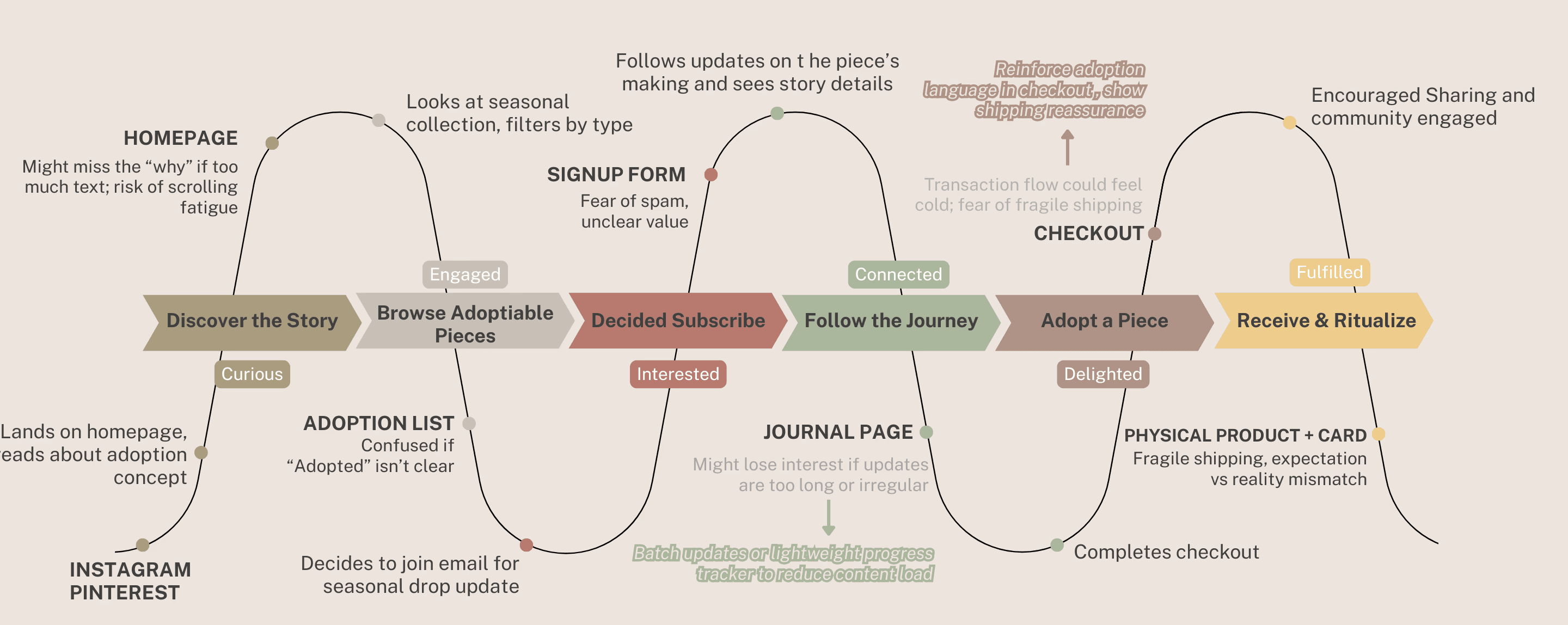
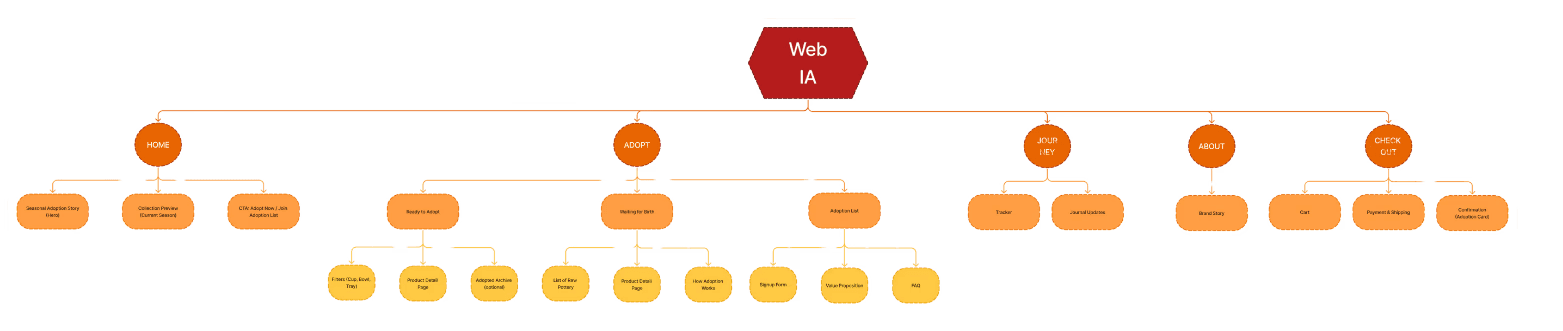
My design process follows a user-centered, iterative approach grounded in research and testing. I start by defining the problem and identifying user goals, then move through information architecture, user flows, and wireframes to validate structure and usability. Through prototyping and feedback, I refine interactions and visual hierarchy to ensure clarity, accessibility, and efficiency.
User flow
Information architecture
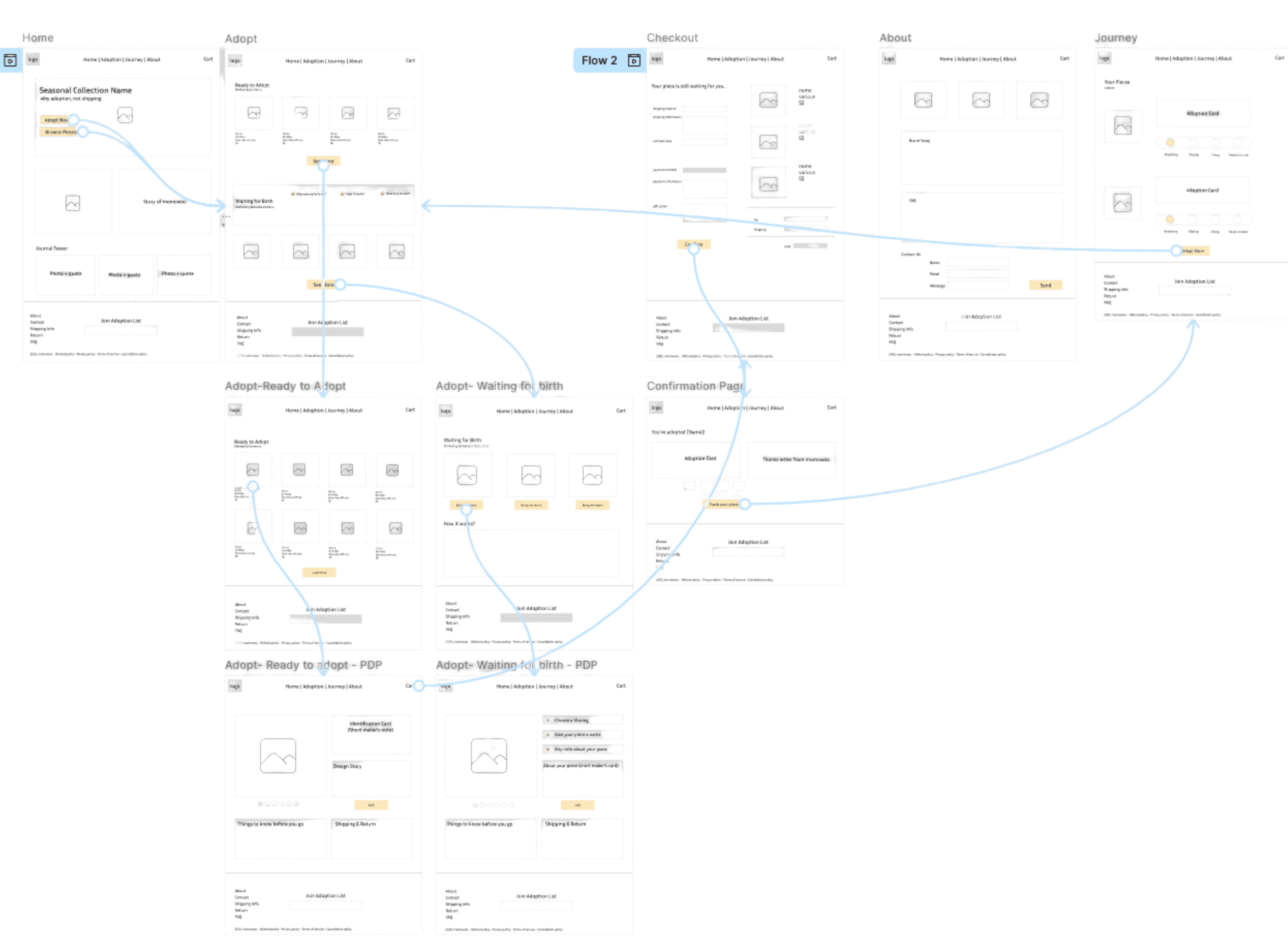
LO-FI WIREFRAME
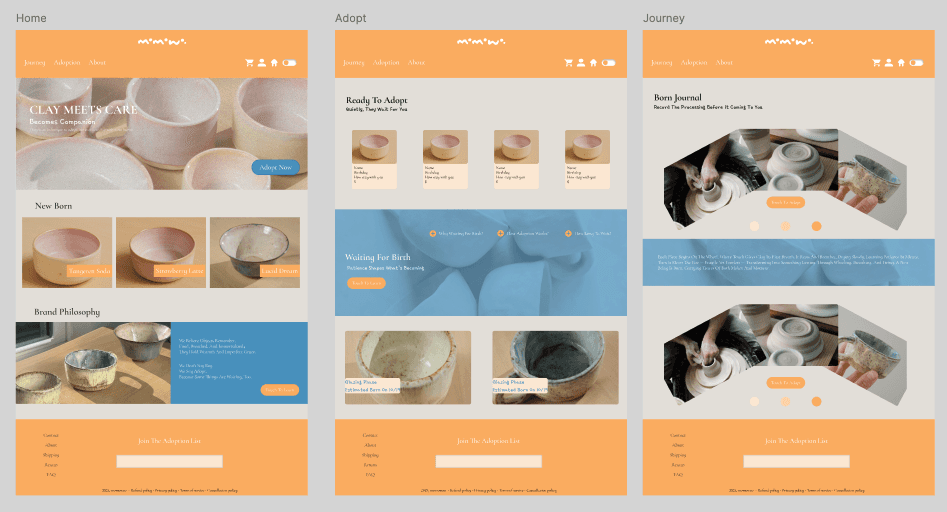
The low-fidelity wireframes map the full adoption journey from discovery to confirmation, focusing on clarity and emotional continuity. Each screen tests navigation, content hierarchy, and decision points to ensure a smooth, intuitive experience before moving into visual design.
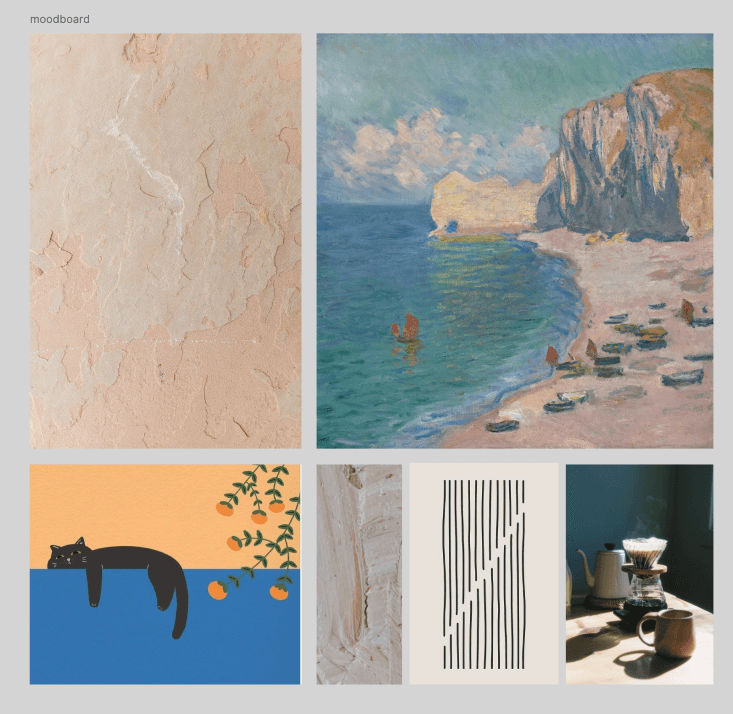
Moodboard & Style
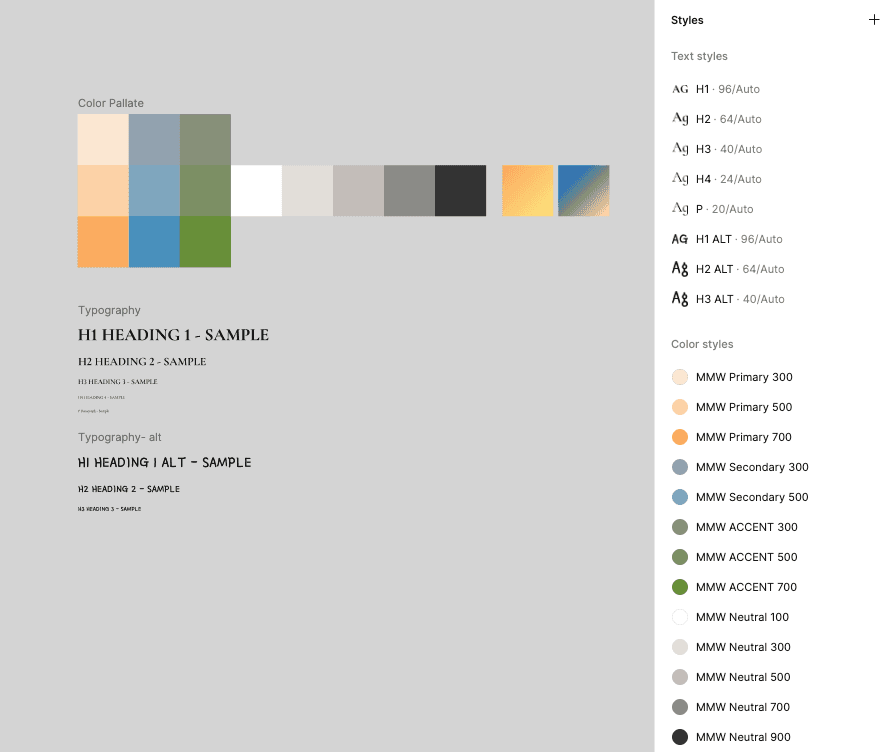
The moodboard captures warmth, texture, and calm inspired by clay, sea, and light. Soft earth tones and gentle blues reflect momowoo’s handmade rhythm — natural, sincere, and quietly alive.
hi-fi Prototype
Outcome & Reflections
Though momowoo remains a conceptual project, the process shaped a strong foundation for a brand-centered UX system built around empathy and storytelling. The outcome is not a market-ready product, but a design framework that translates emotional value into digital interaction — transforming pottery into a narrative experience.
This project also deepened my reflection on how design language evokes empathy. I began to question how AI-generated content could support emotional storytelling — not by replacing human touch, but by helping designers express sincerity and warmth through words and visuals.
Future Update
Next iterations will focus on enhancing accessibility through stronger contrast, keyboard navigation, and alt text support. I also plan to refine micro-interactions, improve mobile responsiveness, and expand usability testing to ensure a more inclusive, seamless experience